Word Connect - Words of Nature
- 4.8
- Rating
- 10.00M
- Installs
- Free
- Price

 Analysis by App-foxy
I enjoy word games that are easy to start but still give my brain something to chew on, and Word Connect - Words of Nature fits that space well. It is a free word game from Appgeneration - Radio, Podcasts, Games, built around finding words from a set of letters. The basic idea is familiar, but the nature-themed presentation and steady puzzle rhythm make it a comfortable choice for short breaks, quiet evenings, or anyone who wants a little vocabulary practice without committing to a long session.
My overall impression is positive, though I would not call it the best match for every word-game fan. It works particularly well when I want a calm solo challenge rather than a timed competition or a social battle. The game is listed for Everyone, runs on operating systems from version 10 onward, and is free to begin. Optional in-app purchases range from $0.99 to $34.99 per item, so I would approach it as a free experience with optional spending rather than assuming every part of the journey is entirely purchase-free.
How the current version feels to play
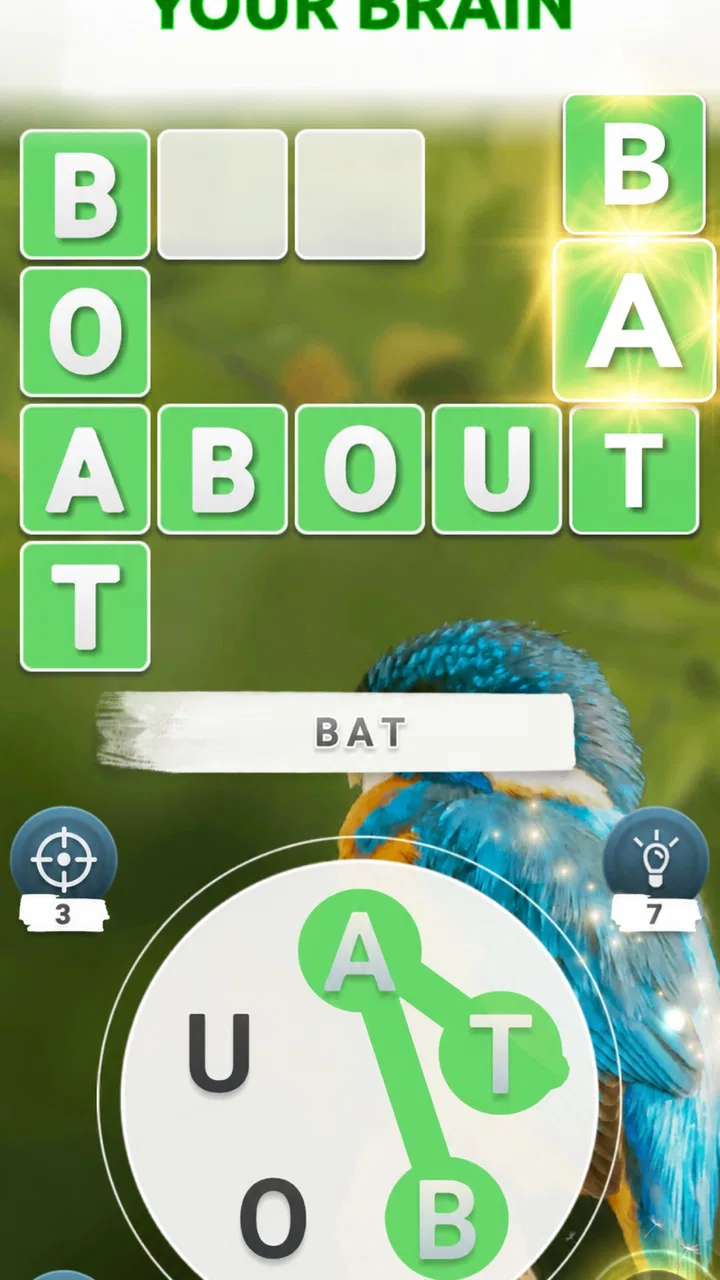
At its heart, the game asks me to examine a small group of letters and discover the words they can form. That sounds simple, but the enjoyable part is the shift between obvious answers and the less immediate combinations that require rearranging letters, testing possibilities, and thinking about familiar word patterns. It is the kind of design that lets me play with one hand while waiting for a coffee, yet can also keep me occupied when I decide to complete a longer run of puzzles.
You May Also Like

 Blood Strike: 2.5 Anniversary
Blood Strike’s Loadouts Turn Every Drop Into a Tactical Gamble
A close look at Blood Strike’s custom loadouts: how fast access to signature weapons reshapes its battle royale rhythm, rewards preparation, and narrows the gap between fights.

 Pandora - Music & Podcasts
Pandora’s Music Is Easy to Start, but Harder to Recover
Pandora’s strength is its low-effort path from a seed to a station. Its weak spot is how much confidence it asks you to place in connection, setup, and quiet recovery.

 8 Ball Pool
 Is Built on Rivalries, Rematches, and Routine
A close look at the rivalries, rematches, shared routines, and unanswered safety questions that turn a quick pool match into a persistent mobile community.

 Samsung Music
’s Quiet Strength Is Playing What You Already Own
Its reach comes less from spectacle than from dependable access to a personal library. That simplicity is both the app’s strongest retention engine and its ceiling.

 AccuWeather: Weather Radar
AccuWeather Review: A Quick, Clear Forecast for Everyday Decisions
For everyday plans, the best forecast is the one you can understand quickly. AccuWeather makes rain timing, radar, and local conditions easy to act on, with a few trade-offs.

 Hill Climb Racing
Why Hill Climb Racing Still Turns Crashes Into One More Run
A tiny car, a bumpy hill and one more upgrade: Hill Climb Racing keeps resurfacing because its simple chaos makes every near-miss feel personal.
More From Our News Desk
View All News


The nature theme gives the experience a softer identity than a plain letter grid. I find that useful because it makes the game feel less like a worksheet and more like a relaxed journey through themed stages. The theme does not change the fundamental word-solving task, but it helps the progression feel more cohesive. If you prefer a stark, highly competitive interface, that atmosphere may seem too gentle. For players who want a peaceful visual setting, it is a meaningful part of the appeal.
The strongest quality is accessibility. I do not need to learn a complicated control system, understand a story, or wait for other players. I can open a puzzle, begin experimenting with the letters, and stop whenever my available time runs out. That makes it suitable for short sessions, especially when I want something more mentally engaging than scrolling through social media.
There is also a useful middle ground in the difficulty. The early experience is approachable enough for casual players, while later puzzles can make me slow down and reconsider words I thought I had already exhausted. The challenge comes less from fast reactions and more from recognizing vocabulary, spotting alternate arrangements, and remembering that a short word may be the missing answer. That focus makes it a better fit for reflective play than for people seeking action or constant pressure.
A practical way to use it during the day
A realistic use case is a short commute or a waiting-room visit. I can play a few puzzles without needing sound, a stable group of friends, or a large uninterrupted block of time. When I get stuck, I can put the phone away and return later with a fresh perspective. That pause matters in word games: a combination that looked invisible a few minutes earlier often becomes obvious after I stop staring at the same letters.
I also like using it as a low-pressure evening activity. Rather than starting a demanding game late at night, I can solve a handful of word boards and finish without feeling that I have abandoned a team or lost progress in a competitive match. The trade-off is that this relaxed structure may feel repetitive if I want a strong narrative, varied objectives, or a clear sense of dramatic escalation.
For vocabulary learners, I would treat it as a supplement rather than a formal study tool. Solving a word is not the same as learning its definition, pronunciation, or correct usage. Still, the act of searching through possible combinations can make me notice spelling patterns and less common words. I get the most value when I pause after finding an unfamiliar answer and check what it means elsewhere, instead of simply tapping through it and moving on.
Small habits that make difficult boards easier
My first useful habit is to stop looking only for long words. Short answers are easy to dismiss because they feel too obvious, yet they are often the bridge to completing a board. I scan for common endings and beginnings, then test whether the remaining letters create a familiar word. This is more reliable than repeatedly dragging or arranging letters at random.
My second tip is to change the way I read the letters when I become stuck. I might say them silently in a different order, look for a vowel surrounded by consonants, or focus on a pair that commonly appears together. The point is to break the visual pattern that has become familiar. Word games often become difficult because I keep searching in the same mental direction, not because the answer is impossibly obscure.
A third strategy is to use help carefully. If a hint is available, I prefer spending it only after I have tried a deliberate scan of prefixes, suffixes, and shorter words. Using assistance immediately can make the game feel like a sequence of taps rather than a vocabulary challenge. Saving it for a genuinely stubborn board preserves the satisfaction of solving most puzzles independently and makes the paid or limited help system less central to the experience.
What the version history means for players
The current version is 6.0.4, and the game was released on February 4, 2021. That places it in a mature stage rather than the early experimental phase of a new release. In practical terms, I approach it as an established word-game format that has had time to settle into its main identity. I would not install it expecting a completely different concept from one update to the next; the attraction is the polished routine of solving nature-themed word puzzles.
The developer, Appgeneration - Radio, Podcasts, Games, has kept the product positioned as a broad, approachable game rather than a specialist vocabulary tool. That matters because the experience is designed to welcome casual players first. The current build should be viewed as the version to judge today, while future changes remain something to watch rather than something I would promise in advance.
The public response is strong: the game holds a 4.8 average from around 99 thousand ratings, with roughly 2.7 thousand written reviews, and it has passed 10 million installs. Those figures suggest that the simple format has reached a substantial audience and that many players find the core loop satisfying. They do not guarantee that every player will enjoy the pacing, but they do support the idea that this is more than a brief novelty.
For someone already playing an earlier build, the most important question is not whether the basic concept has changed, but whether the present version remains comfortable for their routine. A mature release can be reassuring because the central controls and structure are familiar. It can also feel conservative if a player is waiting for a major new mode or a radically different challenge. I would update for the current supported experience, but I would not choose it solely on the expectation of dramatic transformation.
What existing users may notice
Players returning after time away will likely find the same fundamental reason to come back: quick letter puzzles that can be solved at an individual pace. The nature framing helps preserve a recognizable mood, while the broad audience rating keeps the entry point friendly for families and younger players. I appreciate that the game does not require me to be an expert before I can enjoy it, although experienced word-game players may reach a point where the familiar structure no longer feels surprising.
The free entry is another practical advantage for returning users. I can reinstall it and try the current experience without paying upfront. That lowers the risk for anyone unsure about the format. At the same time, the presence of optional purchases means I would pay attention to how often I am tempted to buy assistance or other extras. A free download is convenient, but my real cost depends on how comfortably I can progress without spending.
One useful way to keep the game fresh is to change the purpose of each session. Sometimes I play for completion, sometimes I focus on finding as many valid words as possible, and sometimes I use the puzzles as a vocabulary prompt. This does not add a new mode, but it changes how I engage with the same board. It is especially helpful for existing users who enjoy the core mechanic but are beginning to feel that the routine is predictable.
Where the experience still has limits
The biggest limitation is repetition. The central action remains the central action: inspect letters, form words, and progress through puzzles. That clarity is also the reason the game is accessible, but it means players who need constant mechanical variety may lose interest. Someone looking for battles, multiplayer rankings, a story campaign, or a large collection of unrelated mini-games would probably be happier with another type of word title.
The game may also frustrate players whose vocabulary does not match the expected answers. Word puzzles can create a difficult distinction between “I cannot see the word” and “I do not recognize the word.” When that happens, a hint can keep the session moving, but it can also reduce the feeling that the challenge is testing useful everyday language. I recommend treating unfamiliar answers as opportunities to learn rather than assuming every solution will feel natural.
Another trade-off concerns monetization. Because the game is free and includes purchases from $0.99 to $34.99 per item, players who want a completely uninterrupted experience should decide in advance whether they will avoid optional spending. I find that setting that boundary early is better than making an impulse purchase after getting stuck. Families should also remember that an Everyone rating describes the content suitability, not a promise that optional purchases will never matter.
The minimum operating-system requirement is version 10, which is reasonable for many current phones and tablets but still relevant for people using older hardware. Before planning to make it a regular game, I would check that the device meets that requirement and has enough comfortable screen space for reading the letters. A word game depends heavily on legibility; a cramped or aging display can make a pleasant puzzle feel unnecessarily tiring.
Who should choose it and who should skip it
I would recommend Word Connect - Words of Nature to casual players who like an uncluttered solo challenge, people who enjoy rearranging letters, and anyone looking for a game that fits naturally into short breaks. It is also a reasonable choice for families who want an Everyone-rated word activity, provided adults keep an eye on optional purchases. The nature theme makes it friendlier than a purely utilitarian vocabulary drill, and the free starting point makes trying it straightforward.
I would be more cautious recommending it to competitive players. If your ideal word game includes head-to-head matches, live timers, leaderboards, or a strong social layer, this is probably not the first title I would choose. The same applies to advanced learners who want definitions, pronunciation practice, spaced repetition, or curated language lessons. A dedicated vocabulary app will usually serve those goals better because it teaches meaning as well as recognition.
Compared with a daily word puzzle, this game offers a more continuous stream of boards instead of making the day’s single challenge the main event. Compared with a crossword, it asks for less general-knowledge recall and more letter manipulation. Compared with a word-search game, it is more about constructing answers than spotting them in a fixed grid. Those differences make it easy to place: it is a relaxed, repeatable word workout rather than a formal lesson or a high-stakes contest.
I would also skip it if I know I quickly tire of repeated patterns. The nature setting can soften the repetition, but it cannot remove it. On the other hand, if I enjoy familiar mechanics that let me concentrate without learning new rules, that consistency becomes a strength. The right choice depends less on whether the game is technically complex and more on whether I find satisfaction in gradually clearing letter combinations.
What I would watch before committing long term
For new players, I would watch how often the game presents words that feel useful and recognizable versus answers that seem included mainly to fill a board. That personal test tells me more than a short first session. If I regularly learn something or enjoy the “aha” moment, the format has staying power. If I am relying on help after only a few puzzles, another word-game style may suit me better.
I would also watch my spending behavior. Since the game is free to start but offers optional items, I would play long enough to understand whether the normal puzzle rhythm feels satisfying without purchases. I would not treat a difficult board as evidence that I need to buy anything. A short break, a different solving strategy, or returning later can preserve the challenge without changing the cost of play.
Finally, I would keep an eye on future updates while separating hope from evidence. The current 6.0.4 release supports judging the game as it exists now, not assuming that a future version will add a particular feature or solve a specific limitation. My recommendation is based on the present experience: a mature, approachable word game with a calm nature theme, strong audience reception, and enough puzzle variety to make short sessions worthwhile.
In the end, I see it as a dependable companion for quiet moments rather than a complete vocabulary course or a competitive word arena. I like its low barrier to entry, its flexible session length, and the way a simple letter set can keep me thinking longer than expected. I would install it for relaxed solo play, use hints sparingly, and decide early whether optional purchases fit my habits. If that sounds like the kind of challenge you want, Word Connect - Words of Nature is an easy game to try; if you need social competition or structured language learning, I would point you toward a more specialized alternative.
FAQs for Word Connect - Words of Nature
01What is Word Connect - Words of Nature about?
Word Connect - Words of Nature is a relaxing and engaging word puzzle game. Players connect letters to form words, aiming to complete levels and unlock beautiful nature-themed backgrounds. It's designed to enhance vocabulary and provide a serene gaming experience with its tranquil graphics and soothing soundtracks.
02Is Word Connect - Words of Nature free to play?
Yes, Word Connect - Words of Nature is free to download and play. However, it includes in-app purchases for hints and other game enhancements. These purchases are optional, and players can enjoy the full game experience without spending money by progressing at their own pace.
03What platforms support Word Connect - Words of Nature?
Word Connect - Words of Nature is available for both Android and iOS devices. It can be downloaded from the Google Play Store for Android users and the App Store for iOS users. Make sure your device meets the minimum operating system requirements to ensure smooth gameplay.
04Does Word Connect - Words of Nature require an internet connection?
No, Word Connect - Words of Nature can be played offline, making it convenient for users without constant internet access. However, an internet connection is needed for downloading updates, accessing in-app purchases, and syncing progress across multiple devices.
05How can I get help if I am stuck on a level?
If you're stuck on a level in Word Connect - Words of Nature, you can use in-game hints to help you find words. These hints can be earned through gameplay, or purchased via in-app purchases. Additionally, there are online communities and forums where players share tips and solutions.
Pros
- Engaging puzzles keep your mind sharp.
- Beautiful nature-themed backgrounds.
- Daily challenges boost vocabulary skills.
- Offline play available for on-the-go fun.
- Intuitive interface for easy navigation.
Cons
- Ads can be intrusive and frequent.
- Limited hints without in-app purchases.
- Repetitive levels after long playtime.
- Slow updates with new content.
- Requires constant internet for some features.

Word Connect - Words of Nature
Gallery